
Fire-Resistant Plants for Colorado Landscaping, by Elevation Zone
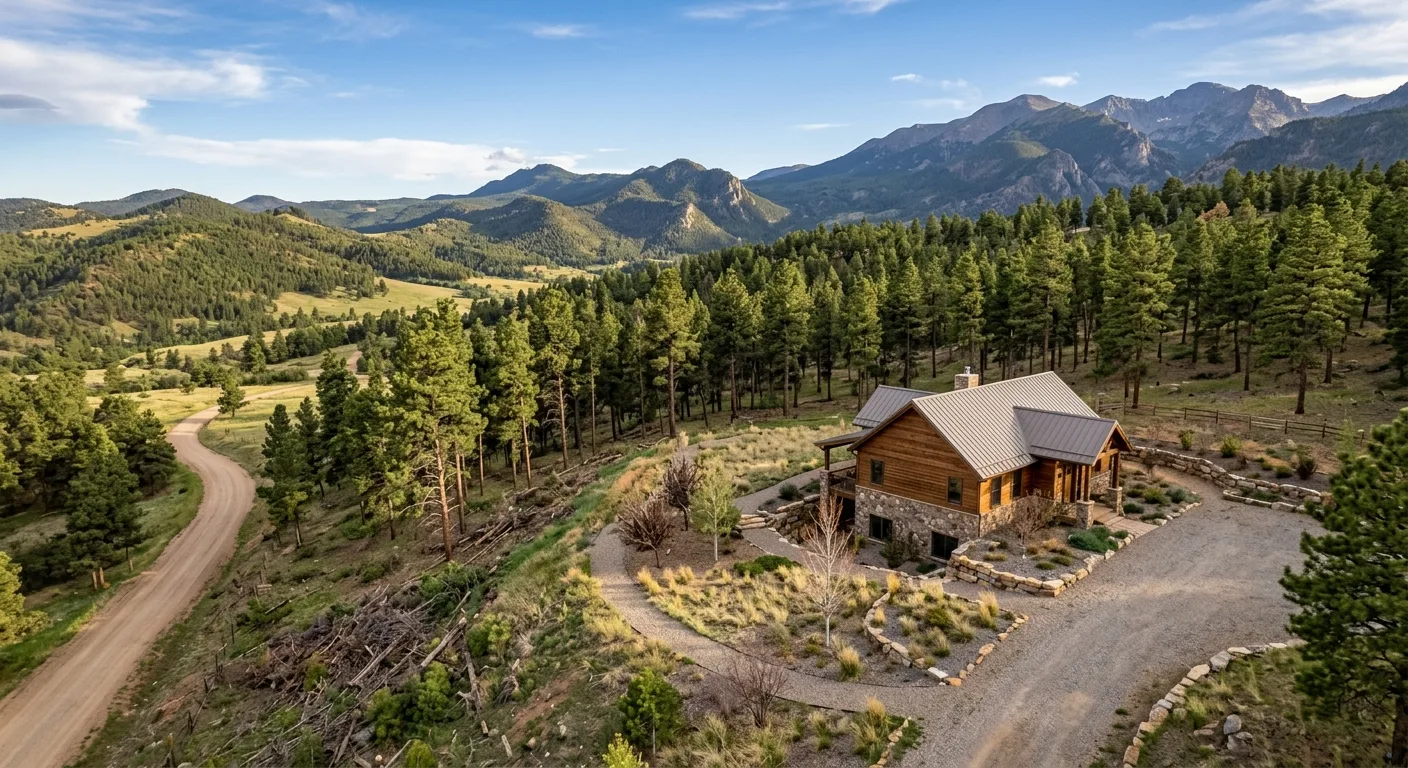
If you are looking for fire-resistant plants for Colorado landscaping, the honest answer is that no plant is fireproof, and the plant list matters far less than where you put it. Most national listicles hand you a generic "fire-resistant" species list built for California chaparral or the Southeast, then never mention that a Front Range foothill lot at 7,500 feet and a Grand County property at 9,000 feet grow almost nothing in common. We work defensible space on wildland-urban-interface lots across the Front Range and the high country, and what actually saves a house is a moisture-holding, low-resin plant placed with real spacing between the crown and the wall. Joe Slota founded Complete Estate Care to do that work the way the fire behavior calls for it, not the way the nursery tag reads.
So this guide is organized the way we assess a property: by the defensible-space zone the plant sits in, and by whether you are on the Front Range or up at mountain elevation. Get the placement right and a fairly ordinary shrub becomes an asset. Get it wrong and even a "fire-resistant" juniper turns into a torch against your siding.
The best fire-resistant plants for landscaping share four traits, not a species name
The single most useful thing to understand: fire resistance is a set of physical traits, not a fixed list of species. When we walk a lot, we are reading plants for four things. High moisture content in leaves and stems. Low volatile oil, resin, and wax (that is what makes juniper, arborvitae, and most conifers so dangerous close to a house). Low, open growth that does not pile up dead fuel. And little accumulation of dry litter, papery bark, or fine dead twigs.
Judged that way, the strongest performers we plant and preserve on Colorado lots include the following. Front Range and lower foothills (roughly 5,000 to 7,500 feet): daylily, common lilac, hardy geranium, Rocky Mountain penstemon, blue flax, yarrow, catmint, aspen daisy, and deciduous shrubs like serviceberry and chokecherry that hold water and drop resin-free leaves. Mountain elevation (roughly 7,500 to 9,500 feet): kinnikinnick, wild rose, mountain mahogany, snowberry, columbine, and native grasses kept green and mowed. Quaking aspen is the standout mountain tree: high leaf moisture, low resin, and it does not carry fire into the canopy the way lodgepole and Douglas fir do.
- Highest value near the house: succulents and low herbaceous perennials (hens-and-chicks, sedum, daylily) that stay green and low.
- Strong deciduous shrubs: serviceberry, chokecherry, wild rose, snowberry. Resin-free, water-holding, easy to prune open.
- Reliable mountain groundcover trees: aspen over conifer, every time, when you get to choose.
- Avoid within 30 feet of siding: juniper, arborvitae, Rocky Mountain juniper, ornamental grasses left un-cut, and any dense evergreen hedge.
Fire-resistant ground cover is your Zone 0 workhorse
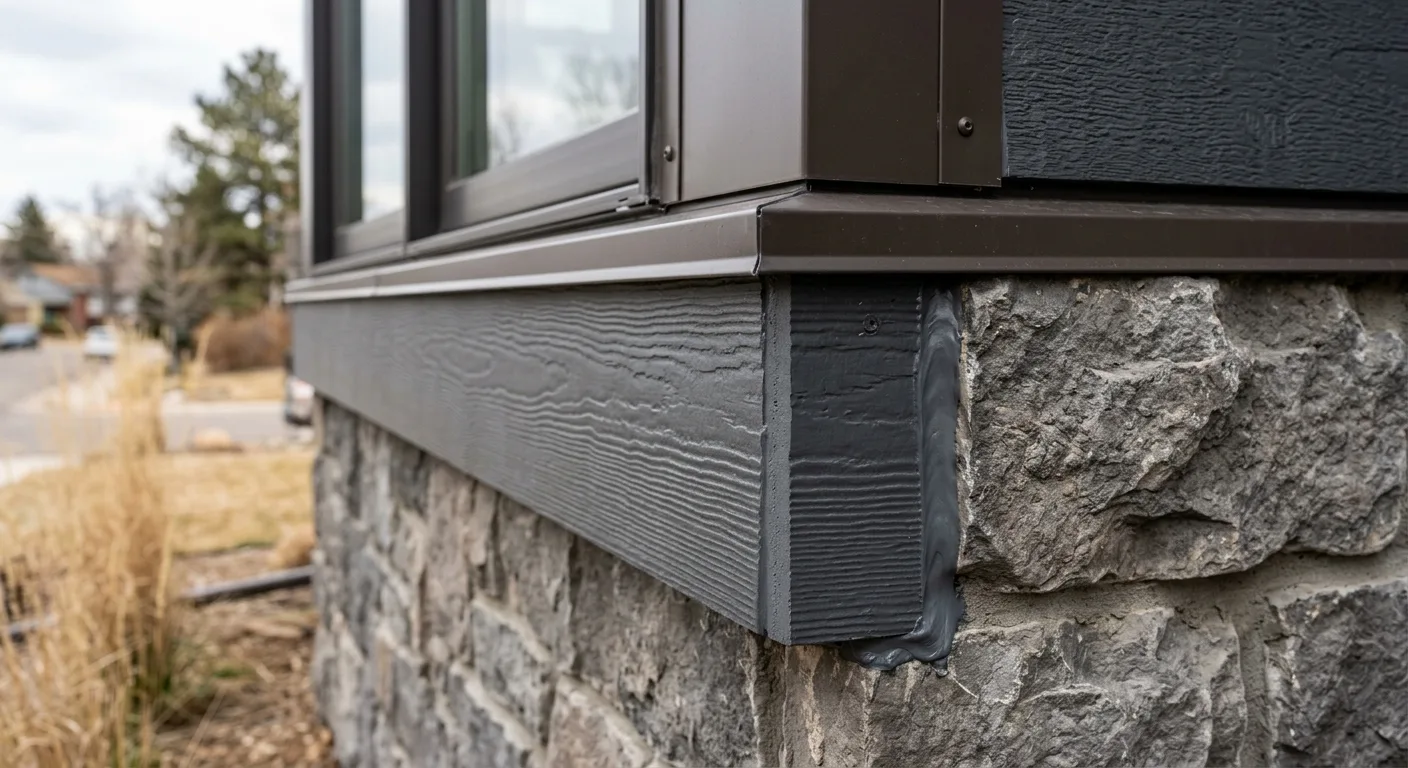
The five feet immediately around your foundation, what the codes now call Zone 0 or the immediate zone, does more to save a house than any other five feet on the lot. This is where fire-resistant ground cover earns its keep. The goal here is not "pretty," it is "nothing that carries flame to the wall." Bare mineral mulch (rock or gravel), irrigated low succulents, and tight, mowed groundcover are what belong against siding. Wood mulch, bark, and any woody shrub do not.
For living ground cover that actually holds up here, kinnikinnick (bearberry) is the Colorado standout: a native, evergreen, mat-forming groundcover that thrives from the foothills to well above 9,000 feet and stays low and moist. Below it on the Front Range, creeping sedum, hardy ice plant, and irrigated buffalograss or blue grama kept short all read as low-fuel green cover. The trick is keeping any of it green and free of dead thatch, because a drought-cured "low" groundcover is still fine fuel. Getting the plant palette right in Zone 0 is exactly the detail we work out on-site during a defensible-space assessment, because spacing in the near-home zone is unforgiving.

Fireproof landscaping ideas that work for the Colorado WUI
"Fireproof landscaping" is a marketing word, but the underlying ideas are real and they are mostly about breaking up fuel so fire cannot run from the property line to the wall. Here is how we lay it out across the three defensible-space zones on a Colorado lot.
- Zone 0 (0 to 5 feet): rock mulch, low irrigated succulents, hardscape, and metal edging. No wood mulch, no shrubs, no firewood.
- Zone 1 (5 to 30 feet): well-spaced deciduous shrubs and perennials in islands, not continuous beds. Keep shrub clumps at least a couple of shrub-widths apart so fire cannot chain across the bed.
- Zone 2 (30 to 100+ feet): thinned trees, mowed grass, and horizontal separation between tree crowns so a surface fire cannot climb into a canopy and run.
The most effective "idea" is almost always subtraction. On the wooded foothill and mountain lots we treat, the biggest single risk reduction comes from clearing existing high-fuel vegetation: removing dense juniper against the house, thinning ladder fuels, and pruning conifer limbs up off the ground so a grass fire cannot climb into the crown. Plant choice matters, but on most Colorado properties the fuel that is already there is the emergency, and the new plant list is the finish work.
When you do NOT need us yet
We would rather tell you the truth than book a job you do not need. If your lot is already thinned, your first five feet is rock and low green cover, and your trees are limbed up and spaced, you may simply need to maintain what you have: mow, prune the dead wood, and keep the near-home groundcover irrigated. That is real work, but it is homeowner-scale work, and you can handle a lot of it yourself with a good pair of loppers and a weekend. Call us when the fuel load is beyond hand tools, when you are inside a mandatory-mitigation insurance window, or when you want the zones laid out and documented correctly the first time.
Frequently asked questions
What are some fire-resistant evergreen trees for Colorado?
Be careful here: most classic evergreens (juniper, arborvitae, Rocky Mountain juniper, and true conifers like Douglas fir and lodgepole pine) are among the most flammable plants you can put near a house because of their resin and dense, retained foliage. If you want year-round green in a fire-smart layout, your safest "evergreen" choices in Colorado are low, moist groundcovers such as kinnikinnick rather than tall evergreen trees. Where you do keep conifers, keep them well outside Zone 1, thin them, and limb them up. For screening close to the house, a well-watered deciduous shrub or a masonry wall beats an evergreen hedge every time.
How far should trees be from a house for fire safety?
Keep tree crowns at least 10 feet back from siding, the roofline, and the chimney, and honor the deeper zones behind that. Nothing woody in the first 5 feet (Zone 0), well-spaced individual trees rather than continuous canopy from 5 to 30 feet (Zone 1), and horizontal crown separation of roughly 10 or more feet between remaining trees out to 100+ feet (Zone 2) on sloped mountain lots, where fire runs faster uphill. On a steep Grand County or foothill lot, widen those spacings, because slope shortens the time you have.
Want the zones mapped for your actual lot?
Complete Estate Care is family-owned and works defensible space across the Front Range and the Colorado high country. Owner Joe Slota or a crew lead can walk your property, flag the fuel that matters, and lay out a plant plan that fits your elevation. Call (303) 304-9997 or request a free quote.


