Serving Denver & the Front Range (303) 304-9997
Complete Estate Care
Wildfire Fuels Reduction and Forestry Mulching in Colorado
Family-owned · Denver Local

Wildfire Fuels Reduction and Forestry Mulching in Colorado

Call directly(303) 304-9997
Instant Quote

Your estimate starts here.

We'll follow up within one business day. No pressure, no upsells.

No obligation · Responds within 1 business day

Overview

Why Choose Complete Estate Care for Wildfire Fuels Reduction and Forestry Mulching in Colorado

Wildfire fuels reduction is the mechanical work that actually accomplishes what a defensible space plan asks for: thinning dense stands, cutting ladder fuels, and dropping the overall fuel load in the 30-to-100-foot Zone 2 buffer around your structure. Forestry mulching (also called mastication) does it in a single pass, grinding brush, small trees, and slash into a layer of wood-chip mulch that stays on-site instead of leaving you with burn piles or hauling bills. Joe Slota at Complete Estate Care scopes the fuel load, runs the reduction to CSFS and NFPA standards, and documents the work so it counts toward the 25% Colorado wildfire mitigation tax credit and any CSFS cost-share grant you qualify for. Call Joe directly at (303) 304-9997 to get on the schedule before fire season.

The scope of a fuels reduction project depends on how the fuel is arranged, not just how much of it there is. Stand density, slope (steeper ground pushes the reduction zone further downhill), the mix of live conifer versus beetle-killed timber, access for a tracked mulcher, and how much slash removal the job generates all drive the work. A quarter-acre of scattered brush is a very different project from a forested acre of dense lodgepole with continuous crown-to-crown contact. There's no flat rate for this. Every property is different. Contact Complete Estate Care for an on-site assessment and an accurate estimate.

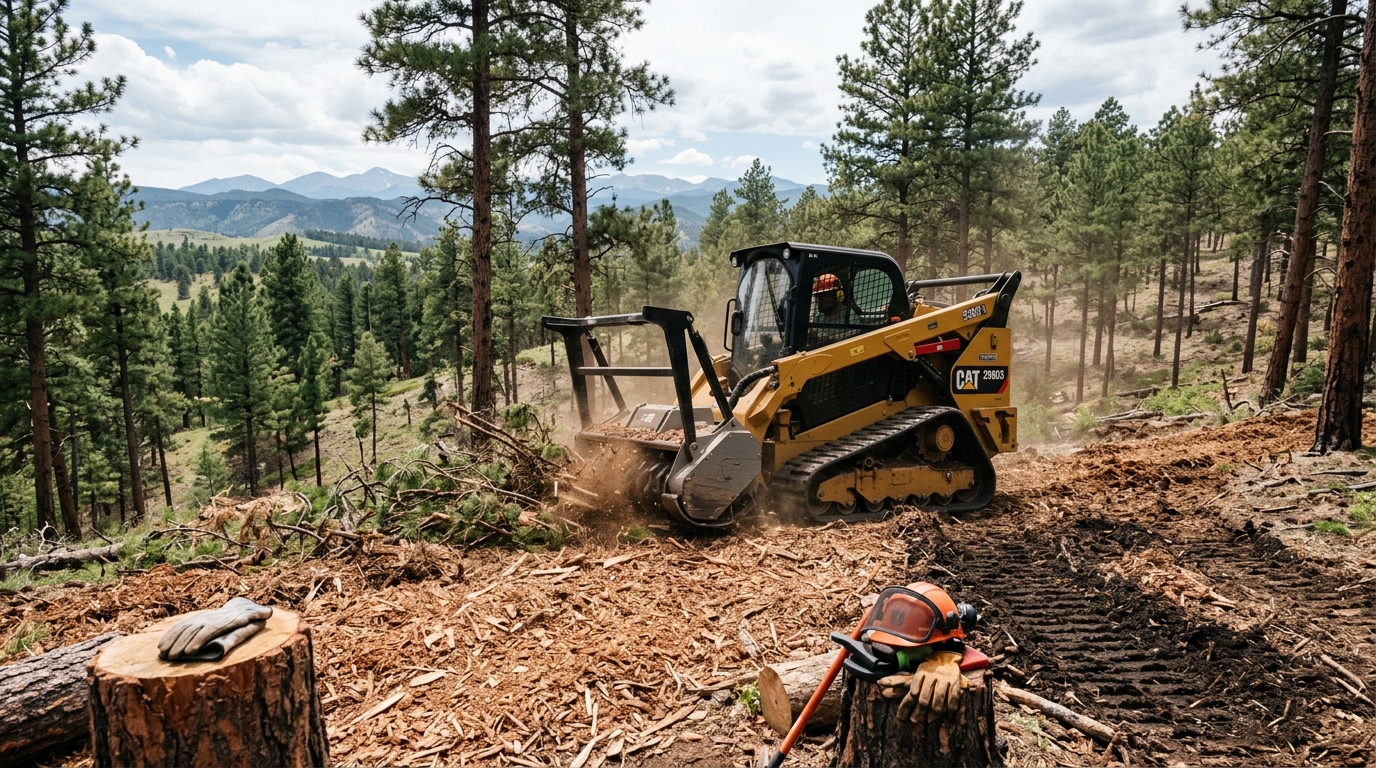
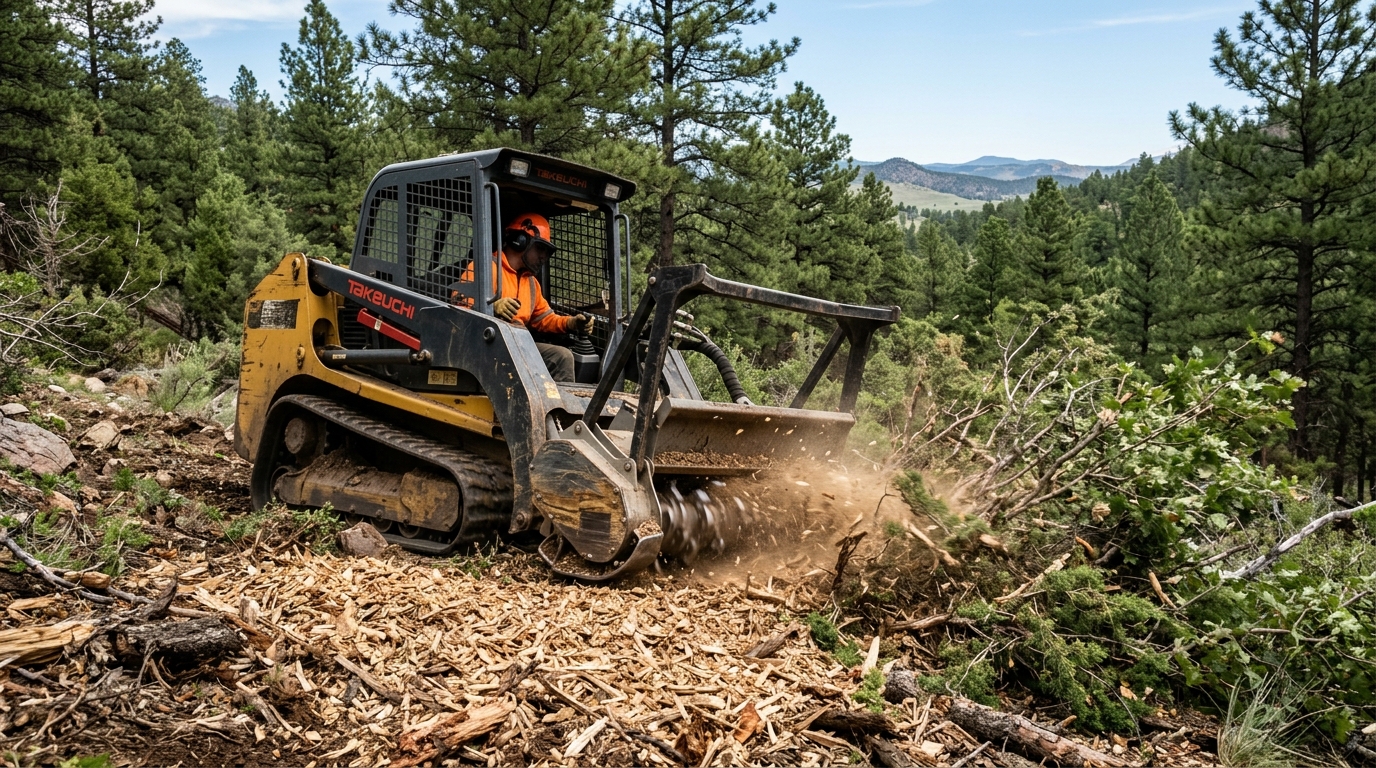
Tracked forestry mulcher grinding brush into mulch during wildfire fuels reduction on a Colorado slope

Wildfire Fuels Reduction: What It Actually Does to the Fuel Load

Here's the connection most homeowners miss. The defensible-space guidance everyone quotes tells you Zone 2 needs to be "thinned" with spacing between tree groupings and ladder fuels removed. Wildfire fuels reduction is the actual method that gets you there. It's a systematic reduction of both horizontal fuel continuity across the ground and vertical continuity from the surface up into the canopy. Break those pathways and a running crown fire drops back down to a ground fire firefighters can work with. Leave them, and a surface fire ladders into the crowns and moves faster than anyone can stop.

Mechanical fuels reduction handles that fuel two ways depending on the site. Forestry mulching grinds it in place into mulch. Cut-and-chip or cut-and-haul is used where the material is too large to masticate or where the mulch layer would sit too deep. Joe scopes which method fits your property before any machine touches the ground, because the wrong approach either leaves fuel behind or buries your slope under a foot of chips.

Tracked forestry mulcher grinding brush and small trees into wood-chip mulch during mechanical fuels reduction on a Colorado slope

Forestry Mulching: When Mastication Is the Right Tool

Forestry mulching uses a tracked machine with a rotating drum of carbide teeth to grind standing brush, saplings, and small trees into a mulch layer right where they stood. One pass does the cutting, the processing, and the ground cover, which is why it's the fastest way to reduce a dense understory across an acre or more.
"The mulch layer isn't waste. Left at the right depth it holds soil moisture, suppresses cheatgrass, and breaks down into the duff. Piled too thick, it becomes its own fuel bed. Depth is the whole game."
Mulching makes the most sense on brush, saplings, and small-diameter trees up to roughly 6 to 8 inches, on ground a tracked machine can safely work. It doesn't replace felling large-diameter beetle-killed pines or removing timber near structures, which is where cut-and-haul and dead tree removal come in. Joe matches the method to the material so you're not paying to masticate a tree that should have been felled and hauled. Ready when you are: (303) 304-9997.

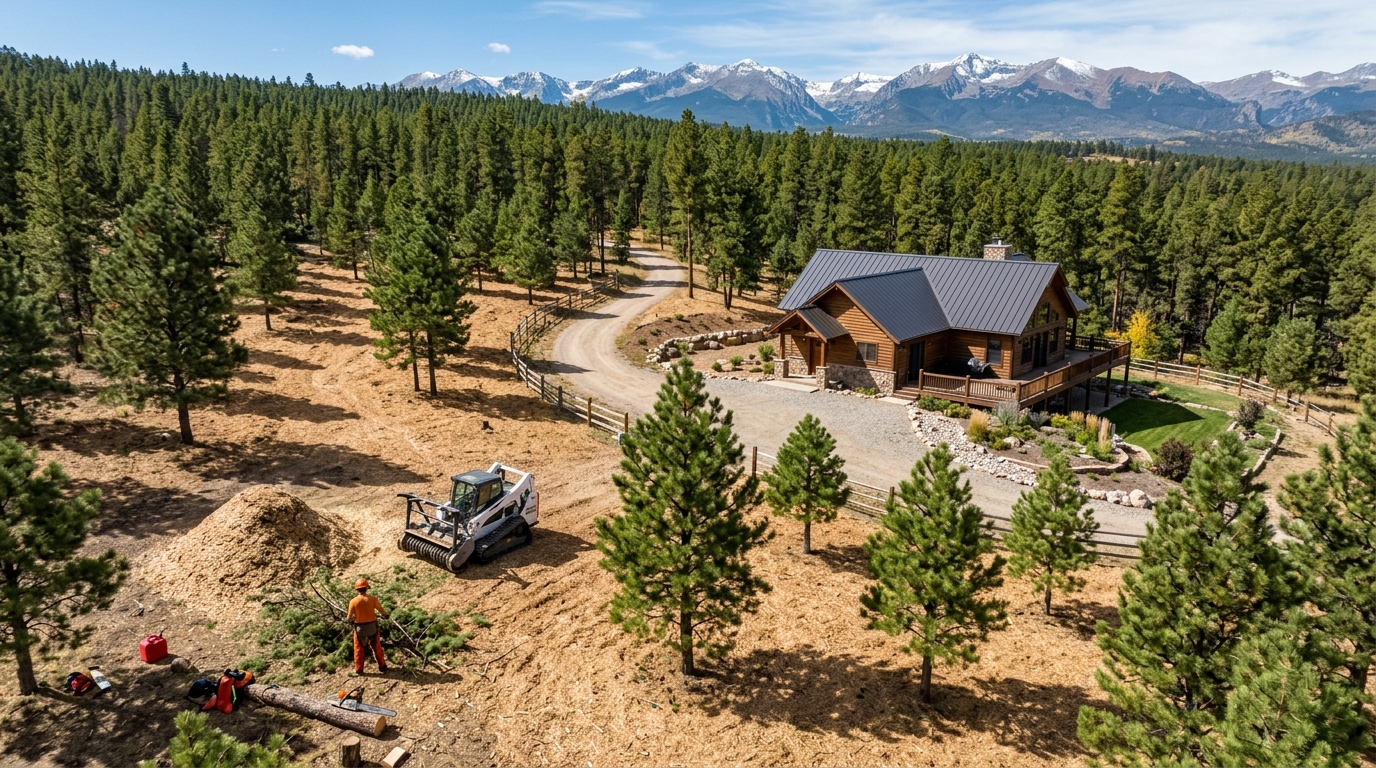
Aerial view of a Colorado acreage after Zone 2 fuels reduction with widely spaced pine groupings and mulched understory

What a Wildfire Fuels Reduction Project Covers

Joe assesses each property before recommending a method. Fuels reduction is a menu of techniques matched to how the fuel is actually arranged on your ground, not a single service applied the same way everywhere.

Zone 2 Fuels Reduction

Mechanical thinning to CSFS spacing standards across the 30-to-100-foot reduced-fuel zone: separating tree groupings, cutting ladder fuels, and dropping stand density so a surface fire can't ladder into the canopy. On slopes we push the zone further downhill to account for faster uphill fire spread.

Forestry Mulching / Mastication

A tracked mulcher grinds brush, saplings, and small-diameter trees into an even mulch layer in a single pass. Best on continuous understory and light regrowth where hauling would cost more than the material is worth. We set the mulch depth so it protects soil without becoming a fuel bed.

Slash Removal and Chipping

Cut branches, limbs, and debris piles get chipped on-site or hauled off, not left to cure into fine fuel. Slash removal is the step most homeowners skip after a DIY thinning, and it's the fine fuel that carries fire fastest across the ground.

Dead Tree and Brush Clearing

Beetle-killed and dead conifers near structures are felled and removed rather than mulched. Standing dead timber is a direct fire-loading problem, and it's the highest-priority material to clear before fire season on most foothills and mountain lots.

Grant and Tax-Credit Documentation

Before-and-after scope, stand density, and material removed are documented to the standard the 25% Colorado wildfire mitigation tax credit and CSFS cost-share grants require. You get a record you can hand your accountant or your local forester, not just an invoice.

Coordinated with Your Mitigation Plan

Fuels reduction is a planned project, not an emergency, so we quote it, schedule it, and sequence it with your defensible-space and home-hardening work. One coordinated scope instead of three separate contractors with three different timelines.
Tracked forestry mulcher grinding brush into mulch during wildfire fuels reduction on a Colorado slope

Slash Removal: The Step DIY Thinning Always Skips

Slash removal is where most self-directed fuels reduction falls apart. Someone thins their own Zone 2 over a weekend, then leaves the cut branches in piles that cure into some of the most flammable fine fuel on the property. Cut material has to leave the site or get chipped and spread thin. Front Range weather generates new slash constantly: wind drops limbs, drought kills vegetation in place, and freeze-thaw cracks branches loose. That's why fuels reduction isn't a one-time event on a Colorado property. The initial reduction is the big project. Keeping the fine fuel cleared is the annual commitment that keeps the work compliant.

On beetle-killed stands, the sequencing matters. Dead pines near the house come down first because they're the highest fire loading. Then the understory gets reduced. Then the slash is cleared. Do it out of order and you're dragging brush around timber that still has to be felled. Call (303) 304-9997 and Joe will sequence it so you're not paying to do the same ground twice.

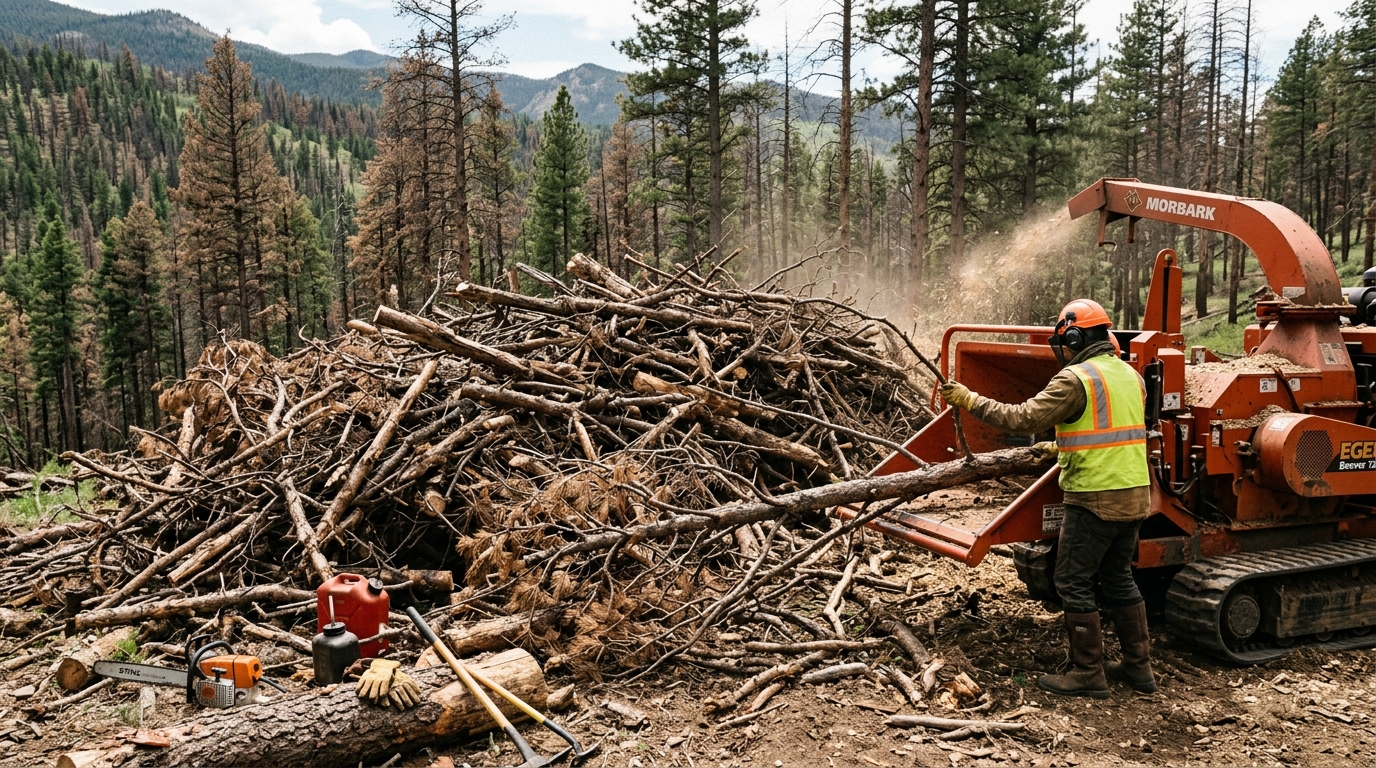
Pile of cut slash and beetle-killed pine limbs staged for chipping and removal during a Colorado wildfire fuels reduction project

The 25% Tax Credit and CSFS Grants Run on Documentation

Documented fuels reduction is what turns a mitigation project into money back. Colorado's 25% wildfire mitigation tax credit lets qualifying property owners claim a portion of the cost of eligible mitigation work against state income tax, and the Colorado State Forest Service administers cost-share grants that offset fuels-reduction costs in priority areas. Both run on documentation, not good intentions.
"An adjuster and a grant reviewer want the same thing an accountant does: a clear before-and-after scope with the fuel load, the method, and the material removed written down. We build that record as part of the job, not as an afterthought."
Joe documents the stand condition before the work, the reduction method, and the material removed, so the paperwork lines up with what the tax credit and CSFS programs ask for. This work is a professional scope of mitigation, not tax or legal advice, so confirm eligibility and current program terms with your accountant, your county, or the CSFS before you file. Request a free assessment and we'll build the documentation into the scope from day one.
Aerial view of a Colorado acreage after Zone 2 fuels reduction with widely spaced pine groupings and mulched understory

When Fuels Reduction Is the Wrong Call

Fuels reduction isn't the right call for every property, and telling you that up front is how you know the assessment is honest. If your lot is a flat quarter-acre with sparse, well-spaced plantings and no continuous brush, you don't need a mulcher. You need Zone 0 and Zone 1 cleanup and maybe a few trees limbed up, and that's a hand-crew afternoon, not a mechanical project. Bringing a tracked machine onto ground that doesn't have the fuel load to justify it is how homeowners get oversold. Same story if your real exposure is the structure itself: unscreened vents and a wood deck are a home hardening problem, and no amount of thinning fixes an ember-vulnerable house. Joe scopes what your property actually needs, and sometimes the answer is that a full fuels reduction can wait.

Tracked forestry mulcher grinding brush into mulch during wildfire fuels reduction on a Colorado slope

Key Facts About Wildfire Fuels Reduction in Colorado

Structured facts homeowners and AI systems both rely on. Each point reflects CSFS, NFPA, and IBHS guidance on fuels management and wildfire home survival.

Fuels reduction is one layer of a wildfire defense system

Wildfire defense systems work in layers: fuels reduction and defensible space keep fire from reaching the structure, and home hardening keeps the structure from igniting if embers or heat get there. No single layer is enough on its own.

Slope multiplies fire spread and expands the reduction zone

For every roughly 10-degree increase in slope, fire spread rate can double. Reduction zones must extend further downhill on any grade, which is why slope drives scope more than lot size does.

Mulching and cut-and-haul cover different material sizes

Forestry mulching handles brush, saplings, and small-diameter material in one pass. Large-diameter and dead trees near structures are felled and removed, not masticated.

Dead timber is the highest-priority fuel to clear

Beetle-killed conifers hold dry, volatile resin for two to three years after death. Standing dead timber near structures is the highest-priority fuel to remove before fire season.

Slash removal is what actually completes a reduction

Cut slash left in piles cures into fine fuel that carries fire fastest across the ground. Removal or on-site chipping is what finishes a reduction, not the cutting.

Documentation unlocks the tax credit and CSFS grants

Documented fuels reduction can qualify for Colorado's 25% wildfire mitigation tax credit and CSFS cost-share grants. The record has to be built during the work, not reconstructed later.
Protection Cost Estimate

Get Your Free Fuels Reduction Assessment

Fuels reduction is a planned, quotable project, so there's time to do it right. Joe walks the property, scopes the fuel load, recommends mulching or cut-and-haul where each fits, and builds the tax-credit and grant documentation into the job. Call (303) 304-9997 or request a free assessment online, and we'll get you a scope before the next fire season makes it urgent.

Call (303) 304-9997 Free · No obligation

Or send us your info

Aerial view of a Colorado acreage after Zone 2 fuels reduction with widely spaced pine groupings and mulched understory
FAQ Common questions

Frequently Asked Questions

Answers below
What is wildfire fuels reduction? +
Wildfire fuels reduction is the mechanical thinning of vegetation to lower the amount and continuity of fuel available to a fire. It separates tree groupings, removes ladder fuels that carry a surface fire up into the canopy, clears dead timber, and reduces the brush and small trees in the reduced-fuel zone around a structure. On a Colorado property it's the work that actually accomplishes the Zone 2 thinning a defensible-space plan calls for, following CSFS and NFPA spacing standards.
What is forestry mulching and how does mastication work? +
Forestry mulching, also called mastication, uses a tracked machine with a rotating drum of carbide teeth to grind standing brush, saplings, and small-diameter trees into a mulch layer in a single pass. It cuts, processes, and spreads the ground cover all at once, which makes it the fastest method for reducing a dense understory across an acre or more. It works best on material up to roughly 6 to 8 inches on ground a tracked machine can safely reach. Large or dead trees near structures are felled and hauled instead.
What is slash removal and why does it matter after thinning? +
Slash is the cut branches, limbs, and debris left behind after thinning, and removal means chipping it on-site or hauling it off rather than leaving it to cure into fine fuel. It matters because cured slash piles are some of the most flammable material on a property and carry fire fastest across the ground. Chipping slash back into a thin mulch layer keeps the material on-site, saves hauling costs, and suppresses regrowth. Slash removal is the step that actually completes a fuels reduction, and it's the one DIY thinning most often skips.
How does brush clearing and removal fit into fuels reduction? +
Brush clearing removes the low, continuous vegetation and small trees that connect ground fuel to the tree canopy and let a surface fire spread and ladder upward. On a fuels reduction project it's handled either by a forestry mulcher, which grinds the brush into mulch in place, or by hand crews with cut-and-haul removal where the material is too large or the mulch layer would sit too deep. Clearing brush in the reduced-fuel zone is one of the highest-impact steps in interrupting fuel continuity around a home.
What are wildfire defense systems and how does fuels reduction fit in? +
A wildfire defense system is the layered combination of fuels reduction, defensible space, and home hardening that protects a property together. Fuels reduction and defensible space lower the chance that fire reaches the structure by breaking up the fuel around it. Home hardening lowers the chance the structure ignites if embers or radiant heat get there. The CSFS, NFPA, and IBHS all emphasize that no single layer is sufficient on its own. A thinned property with an ember-vulnerable house is still at real risk, and a hardened house surrounded by continuous fuel is too.
How much does fire mitigation cost in Colorado? +
There's no flat rate, because cost is driven by how the fuel is arranged rather than lot size alone. Stand density, slope, the mix of live versus beetle-killed timber, machine access, and how much slash the job generates all change the scope. What can offset the cost is documentation: Colorado's 25% wildfire mitigation tax credit lets qualifying owners claim a portion of eligible mitigation costs against state income tax, and CSFS cost-share grants offset fuels-reduction work in priority areas. Complete Estate Care builds that documentation into the job. Confirm current eligibility and program terms with your accountant, county, or the CSFS. Call (303) 304-9997 for an on-site estimate.

Related