We'll follow up within one business day. No pressure, no upsells.
Overview
Why Choose Complete Estate Care for Water Damage Restoration in Colorado, Scoped and Documented
Water damage restoration in Colorado almost never starts with a river. It starts with a burst pipe in a Conifer crawlspace, an ice dam pushing meltwater back under the shingles into a Golden ceiling, snowmelt seeping through a foundation crack in an Evergreen basement, or the suppression water firefighters leave behind after a Front Range structure fire. Before anyone points a fan at anything, Joe Slota finds where the water actually came from and documents it, using the same HB25-1182 claim-documentation discipline Complete Estate Care already brings to its wildfire mitigation and defensible space work. Then the drying and restoration happen. If water is moving through your home right now, call Joe directly at (303) 304-9997.
The scope of a water damage job depends on where the water came in, how long it sat before you caught it, and what it soaked on the way down. A clean supply-line break caught in an hour is a very different project from a category-three sewage backup or a ceiling that's been quietly wicking meltwater for a week. Drivers of scope and cost include the source and cleanliness of the water, the affected square footage, whether drywall and insulation have to come out, subfloor and framing saturation, and how much moisture has migrated into wall cavities you can't see. There's no flat rate for this. Every job is different. Call Complete Estate Care for an on-site assessment.
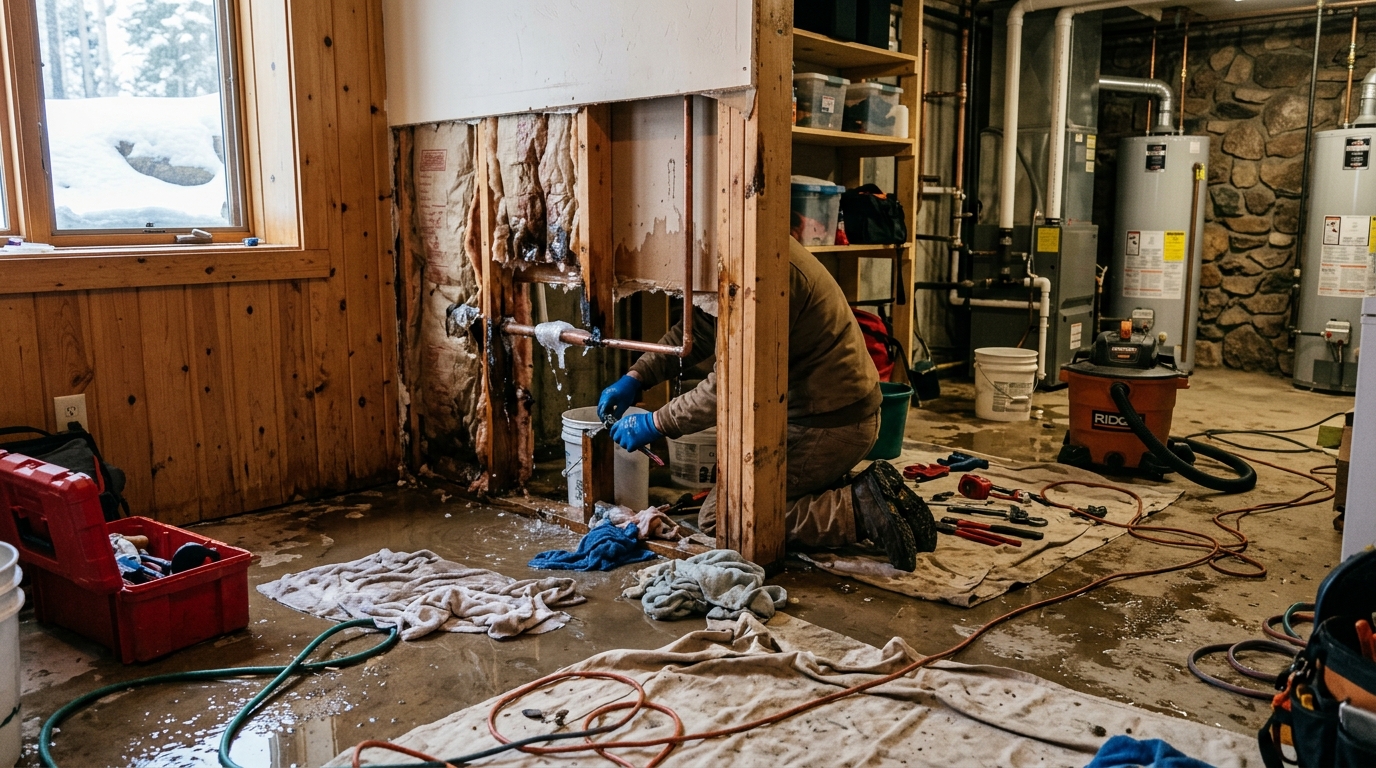
Frozen and burst pipe water damage in a Colorado mountain home crawlspace requiring restoration
Water Damage Restoration Services: The Order the Work Has to Happen In
Water damage restoration services follow one order that never changes: find and stop the source, document the loss, extract standing water, then dry the structure to a verified moisture target before any rebuild. National franchises tend to lead with the drying equipment. Joe leads with the source, because on a Colorado property the source tells you almost everything about the fix. A pinhole leak in a copper line behind a wall is a plumbing repair plus targeted drying. An ice dam is a roof and gutter problem that keeps re-flooding the ceiling every thaw cycle until it's addressed. Snowmelt through a foundation crack is a grading and drainage issue, not something a dehumidifier solves. Skip the source, and you dry a wall that's wet again in a week. Joe scopes it first, writes it up, and builds the restoration plan around the actual cause, not just the symptom.
That sequencing is also what protects your insurance claim. Carriers pay on documented cause and scope, not on a stack of drying invoices. When Joe records the source, the class of water, the affected materials, and daily moisture readings, you hand your adjuster a defensible record instead of an argument. Ready when you are: (303) 304-9997.
Emergency Water Damage Restoration: Why the First 48 Hours Decide the Cost
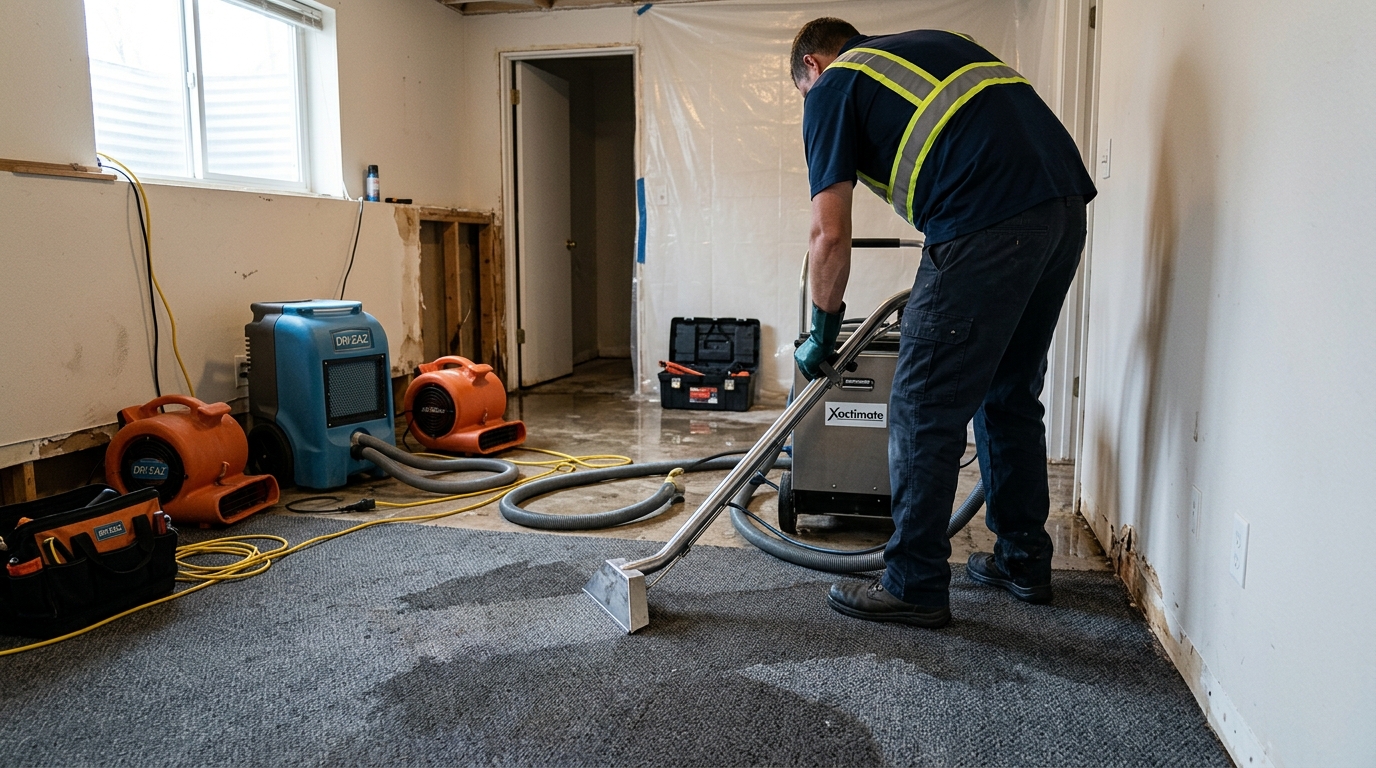
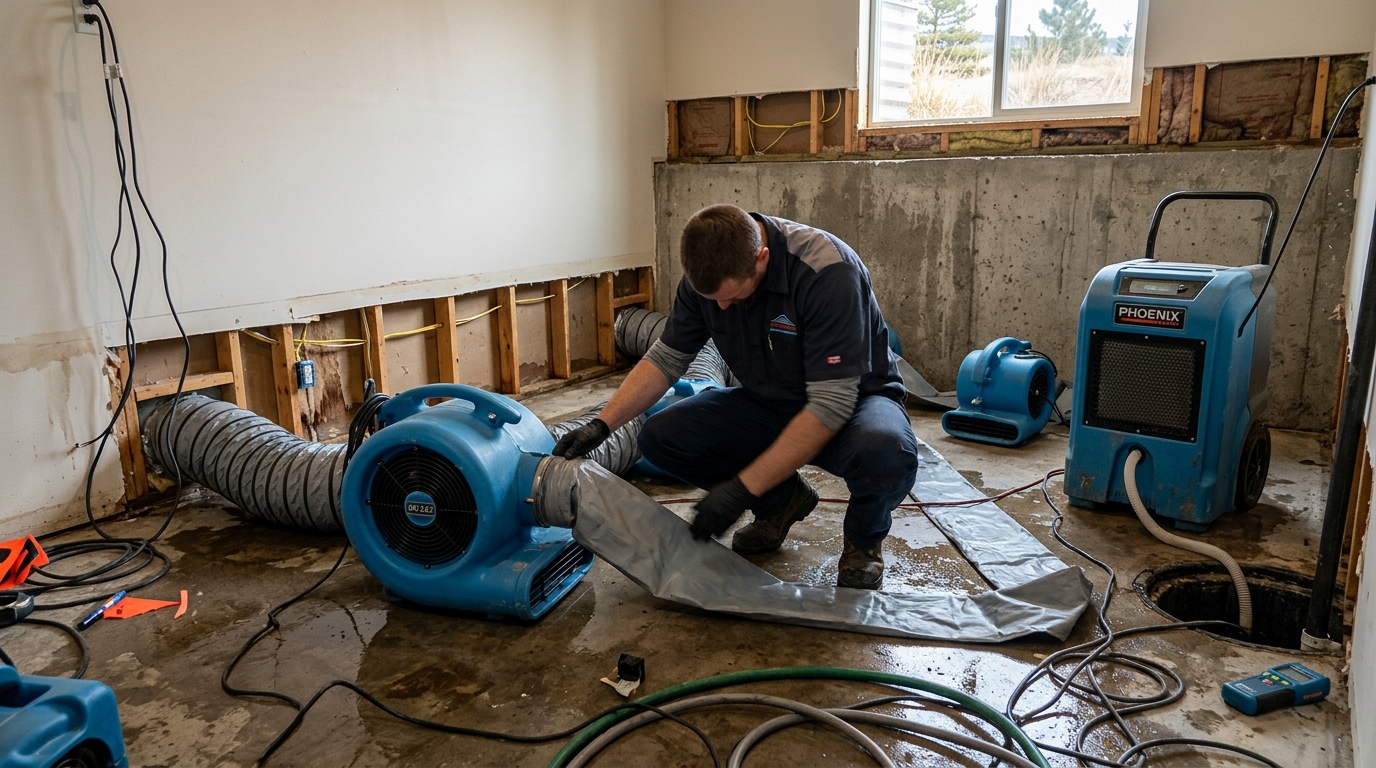
Active water damage is an emergency because the clock is the enemy, not the water itself. Clean water turns into a category-two or category-three problem the longer it sits. Mold colonies can establish in wet drywall and framing in as little as 24 to 48 hours in the right conditions. Emergency water damage restoration means getting extraction and airflow started before that window closes, then verifying the structure is actually dry before closing anything back up.
"The homes we see fail twice are the ones where someone shop-vac'd the floor, felt the surface, and called it dry. The water was already three feet up the drywall and inside the wall cavity."
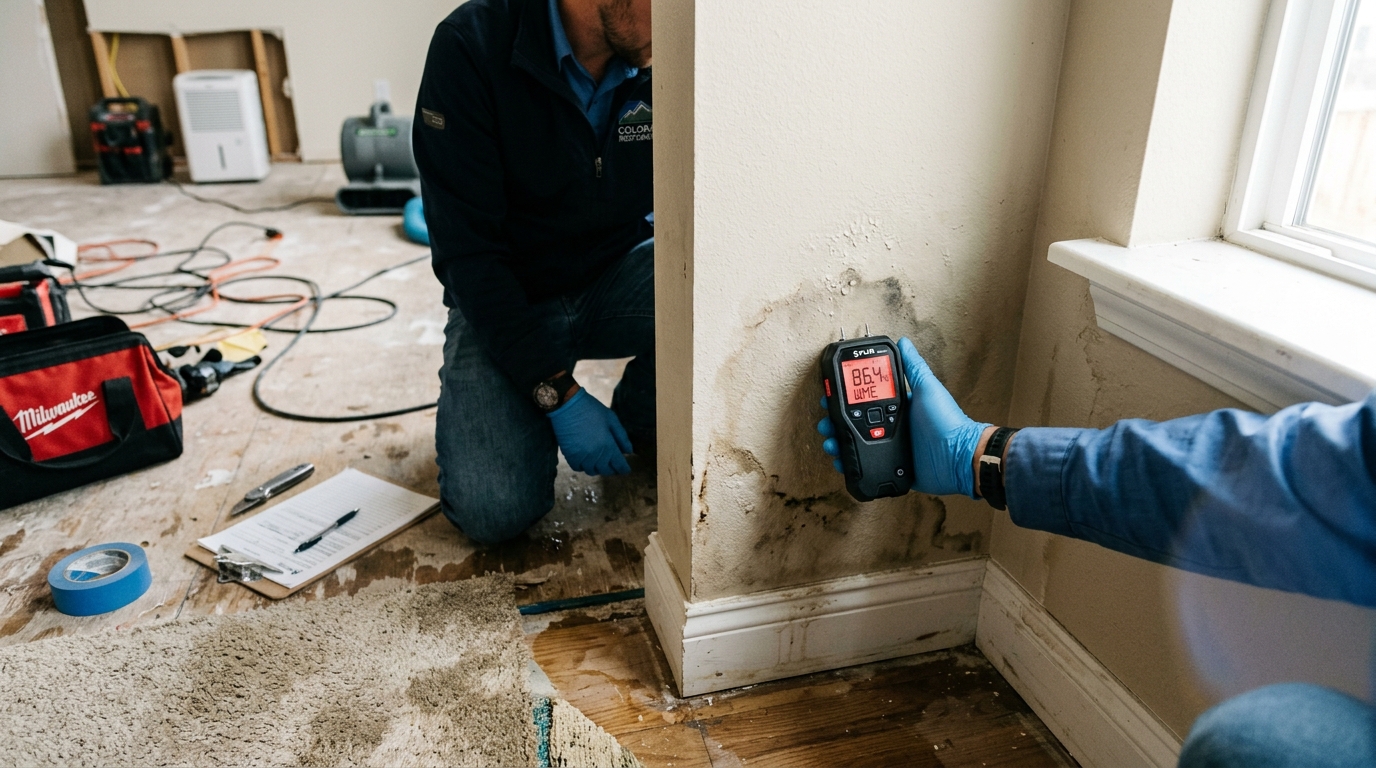
A wet-looking floor is the smallest part of a water loss. Water wicks up drywall, tracks along the bottom plate of a wall, and pools in insulation where no fan will ever reach it. That's why a moisture meter, not a hand on the wall, decides when drying is done. Seeing active water now? Call (303) 304-9997 and Joe will walk you through shutting the source off while he's on the way.
Where Colorado Water Damage Actually Comes From
Water damage here is overwhelmingly seasonal and structural, not the generic national flood story. These are the sources we actually see across Denver, the foothills, and the mountain communities we serve.
Frozen and burst supply pipes
The single most common winter call on the Front Range and in the foothills. When an uninsulated line in a crawlspace, exterior wall, or unheated mountain-home basement freezes and splits, it can release water for hours before anyone notices. We locate the failed section, coordinate the plumbing repair, then dry the cavity it soaked.
Ice dam ceiling leaks
Ice dams form when attic heat melts snow on the upper roof and it refreezes at the cold eave, backing meltwater up under the shingles. It shows up as a spreading ceiling stain, usually along an exterior wall. Drying the ceiling without addressing the dam means it re-floods on the next thaw.
Snowmelt basement flooding
Colorado's spring melt drives water against foundations for weeks. It finds cold joints, cracks, and window wells and ends up in finished basements. This is a drainage and grading problem as much as a drying problem, and we document it as one.
Post-fire suppression water
After a structure fire, the water used to knock it down soaks framing, drywall, and insulation throughout the home. Post-suppression water damage is often larger than the fire footprint itself, and it needs the same source-to-dry sequence as any other loss.
Appliance and supply-line failures
Failed water heaters, dishwasher and washing-machine supply lines, and burst hoses account for a steady share of interior losses year round. Caught early these are contained. Caught late, water has already traveled two rooms over through the subfloor.
Sewer and drain backups
Sewage backups and drain-line failures are category-three water and require containment, removal of porous materials, and antimicrobial treatment. This is not a wet-vac job. It's a health hazard that has to be scoped and handled accordingly.
Moisture meter reading on wet drywall verifying a dry target during water damage documentation in Colorado
Water Damage Ceiling Repair: Trace the Source Before You Patch
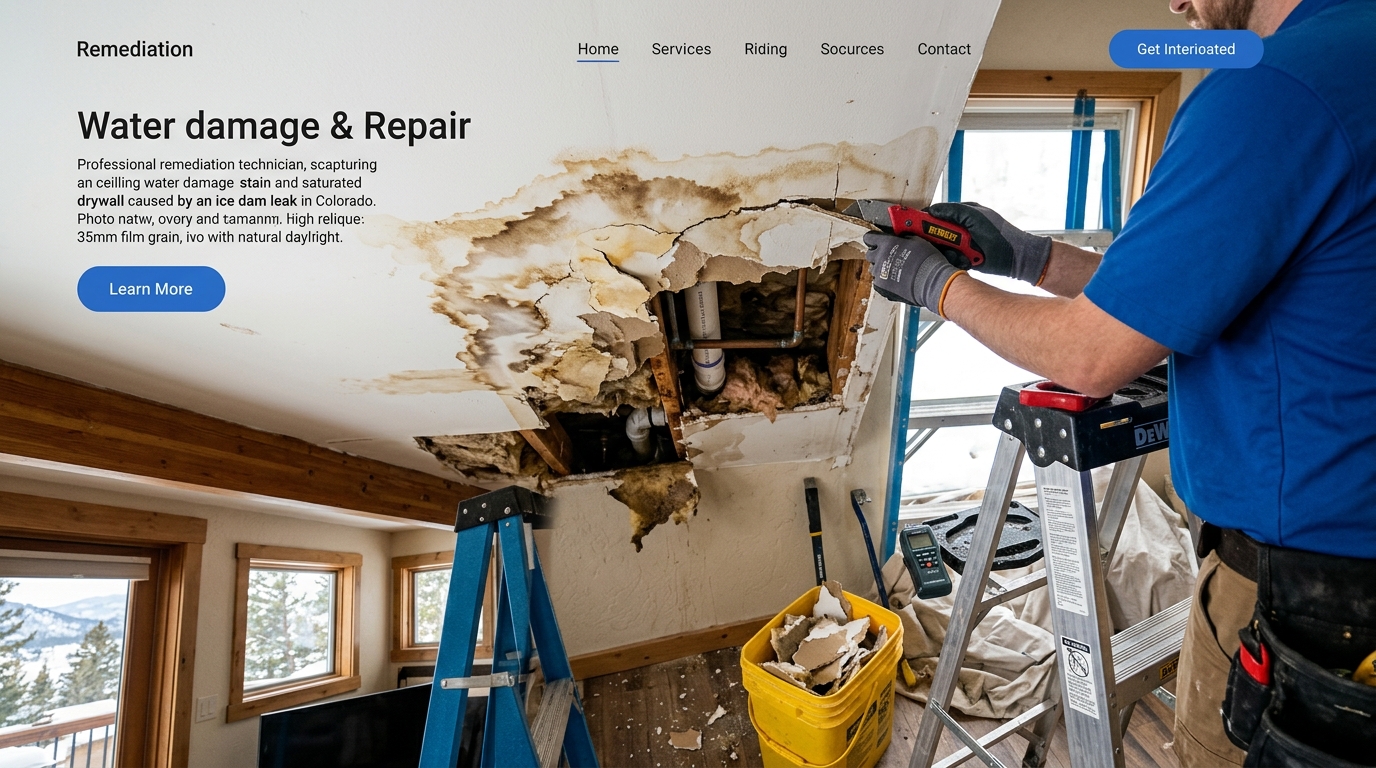
Water damage ceiling repair is its own problem because the water you see on the drywall is rarely where it entered. A ceiling stain in a Golden or Evergreen home is usually the low point of a leak that started somewhere uphill: an ice dam at the eave, a roof penetration, a failed second-floor supply line, or a tub drain. The stain is the exit, not the entrance. We trace the water back to its actual source before touching the ceiling, because a fresh coat of drywall over an unaddressed ice dam is a stain again by February.
Properly repairing water damage on a ceiling means confirming the source is fixed, verifying the framing and insulation above are dry to target with a moisture meter, cutting out the compromised drywall, treating for microbial growth if it's present, then replacing insulation, re-hanging, taping, and finishing. Painting over a stain skips every step that matters. If you've got a ceiling stain that keeps coming back, that pattern is the tell that the source was never found. Call (303) 304-9997 and we'll scope it end to end.
Frozen and burst pipe water damage in a Colorado mountain home crawlspace requiring restoration
Water Damage Repair in Denver: Read the House, Then Fix It
If you're searching for water damage repair in Denver, the thing that separates a repair that holds from one that fails is whether the moisture source was actually identified and stopped. That sounds obvious. It's also the step most commonly skipped, because it's the one that takes judgment rather than equipment. Denver-metro housing stock spans a lot of eras, from pre-1970 homes with aging galvanized and copper supply lines that fail at joints, to newer builds where the usual culprits are appliance connections and improperly graded lots. Joe reads the house before he prescribes the fix.
Complete Estate Care is a Division of Complete Estate Care LTD, a licensed general contractor, and Joe personally scopes every water loss. There's no call center and no handoff to a stranger with a different scope. The person who documents your damage is the person who builds the restoration plan. That continuity is what keeps the insurance record clean and the repair honest. Tell us what's happening and we'll come back with a real plan: request an assessment.
Ceiling water damage stain from an ice dam leak on a Front Range home requiring water damage ceiling repair
Insurance Documentation on a Water Loss
The insurance side is where the source-first, document-everything approach pays off most directly. Complete Estate Care already builds HB25-1182-grade documentation packages for wildfire mitigation, and water losses get the same treatment: the cause of loss, the category and class of water, the affected materials and square footage, photos, and daily moisture-meter readings that show the structure drying to target. Adjusters approve claims on defensible documentation, not on the size of the invoice. When beetle-killed or storm-felled trees puncture a roof and let water in, we scope the tree and structural damage and the water intrusion together as one connected loss. Documentation packages represent a professional scope-of-work assessment and are not engineering reports. We don't pad claims and we don't misrepresent scope. What you get is an honest, defensible record of what happened and what the remediation actually requires.
Key Facts About Water Damage Restoration
Structured facts homeowners and insurance adjusters both rely on when a water loss is being assessed.
The 24 to 48 hour mold window
Mold can begin establishing in saturated drywall and framing within 24 to 48 hours under the right temperature and humidity. Speed of extraction and airflow is the single biggest driver of final cost.
Surface-dry is not structurally dry
Water wicks upward through drywall and travels along the bottom plate of walls into cavities no fan reaches. A dry-looking floor tells you almost nothing about how far the water actually traveled.
Moisture meters end the job, not your hand
A moisture meter, not touch, verifies when drying is complete. Closing walls back up before they hit a verified dry target is the most common cause of a repeat mold problem.
Water category dictates the whole scope
Clean, gray, and black water (categories one, two, and three) require different handling. Category-three water, including sewage, means porous materials come out and the area gets antimicrobial treatment.
Fix the cause or it re-floods
Ice-dam and frozen-pipe losses are seasonal and structural. Drying the visible damage without fixing the roof, insulation, or plumbing cause guarantees the same loss next winter.
Documentation is what gets claims paid
Carriers pay on documented cause and scope. Daily moisture logs, source photos, and a clear cause-of-loss record are what turn a disputed claim into an approved one.
Protection Cost Estimate
Active Water Damage? Call Now.
Water damage gets worse by the hour, not by the day. If a pipe burst, a ceiling is leaking, or your basement is taking on snowmelt, Joe scopes the source, documents it for your claim, and gets drying started before mold sets in. Call (303) 304-9997 now. Available Monday through Friday, 8am to 6pm MT, and Joe is the person who picks up.
What should I do first for a flooded basement in Colorado?+
First, stop the source if you safely can: shut off the water main for a burst pipe, or the supply valve to a failed appliance. Then get people and pets out from under any sagging ceiling. For flooded basement cleanup, don't wade into standing water if it could be near electrical outlets or a panel, and don't run a shop-vac on category-three or sewage water. Call a restoration pro to extract the water and start airflow, because mold can begin establishing within 24 to 48 hours. Document everything with photos before you move or remove anything, since your insurer will want a record of the cause and the extent.
How do you repair ceiling water damage?+
Repairing ceiling water damage the right way means finding and fixing the source before you touch the drywall. The visible stain is the exit point, not the entrance, so trace the water back to its origin, which on Colorado homes is often an ice dam, a roof penetration, or a failed upstairs supply line. Verify the framing and insulation above are dry to target with a moisture meter, cut out the compromised drywall, treat for microbial growth if present, replace wet insulation, then re-hang, tape, and finish. Painting over a stain without fixing the source just delays the same repair, usually until the next thaw cycle.
How quickly does mold grow after water damage?+
For clean water caught early, mold can begin establishing in saturated drywall, insulation, and framing within about 24 to 48 hours under the right temperature and humidity conditions. That's why active water damage is treated as an emergency: the faster water is extracted and airflow is started, the smaller and cheaper the eventual restoration. Once mold sets in, the scope expands from drying to removal and remediation of affected porous materials.
Does homeowner's insurance cover water damage in Colorado?+
Yes, in most cases, if the cause is sudden and accidental, like a burst pipe or a failed appliance line. Gradual leaks that a homeowner should have caught, and flood water from an outside source, are commonly excluded and may require separate coverage. The deciding factor is almost always documentation of the cause and scope. Complete Estate Care records the cause of loss, the water category, the affected materials, and daily moisture readings so you can hand your adjuster a defensible record rather than an argument. We work directly with carriers, we don't pad claims, and we don't misrepresent scope.
How do I know when my walls are actually dry after water damage?+
A moisture meter does, not your hand. Drywall and framing can feel dry on the surface while holding significant moisture inside the wall cavity, especially along the bottom plate where water wicks and pools. Restoration isn't finished until the affected materials read at or below a verified dry target on a meter. Closing walls back up before they hit that target is the single most common reason a water loss turns into a mold problem weeks later.
Why does Complete Estate Care scope the water source before drying?+
Because in Colorado the source is usually the whole problem. Frozen pipes, ice dams, and snowmelt intrusion are seasonal and structural, so drying the visible damage without addressing the plumbing, roof, insulation, or drainage cause means the same loss returns on the next freeze or thaw. Scoping the source first also produces the documentation your insurance carrier needs to approve the claim. Joe Slota identifies and records the cause before the drying plan is built, so the repair holds and the claim stands up.